


Colposcopy
Why it is done, the steps of the exam, and aftercare
- A colposcopy is a close examination of the cervix using a magnifying instrument.
- A colposcopy usually takes 15 to 20 minutes.
- A colposcopy does not treat HPV. It is done to take a closer look at changes in the cervix.
- The exam itself is usually not painful, but taking a small tissue sample (biopsy) may cause a little pain.
- If you have heavy bleeding, fever, discharge with an unpleasant smell or severe pain after a colposcopy, contact your doctor.
- What happens next depends on the results of the exam and the biopsy.
Video in Persian
From anywhere in the world
Tehran clinic services
Key facts about colposcopy
What is a colposcopy?
It is a closer examination of the cervix using a magnifying instrument. The instrument itself stays outside your body and does not go into the vagina.
Why has my doctor recommended a colposcopy?
It is usually recommended after an abnormal Pap test (Pap smear; in the UK, a smear test) or HPV test result, after spotting, or when something that looks abnormal is seen during an exam.
Does it hurt?
You may feel some pressure or mild discomfort during the exam. A biopsy can also cause brief pain or cramping. Everyone’s experience is different.
When will my results be ready?
Your doctor will usually tell you straight away what they saw, but this is only a first impression based on what can be seen. A final answer comes only from the tissue sample (biopsy) results, which usually take a few days to a few weeks.
How does a colposcope work, and where is it placed?
A colposcope works like a powerful magnifying glass that gives an enlarged view of the cervix. During the exam, a speculum (the same instrument used in a routine pelvic exam) is placed in the vagina. The colposcope itself stays outside your body.
Don't confuse colposcopy with colonoscopy!
A colonoscopy looks at the bowel and may be done with sedation. A colposcopy looks at the cervix and usually does not need general anesthesia.
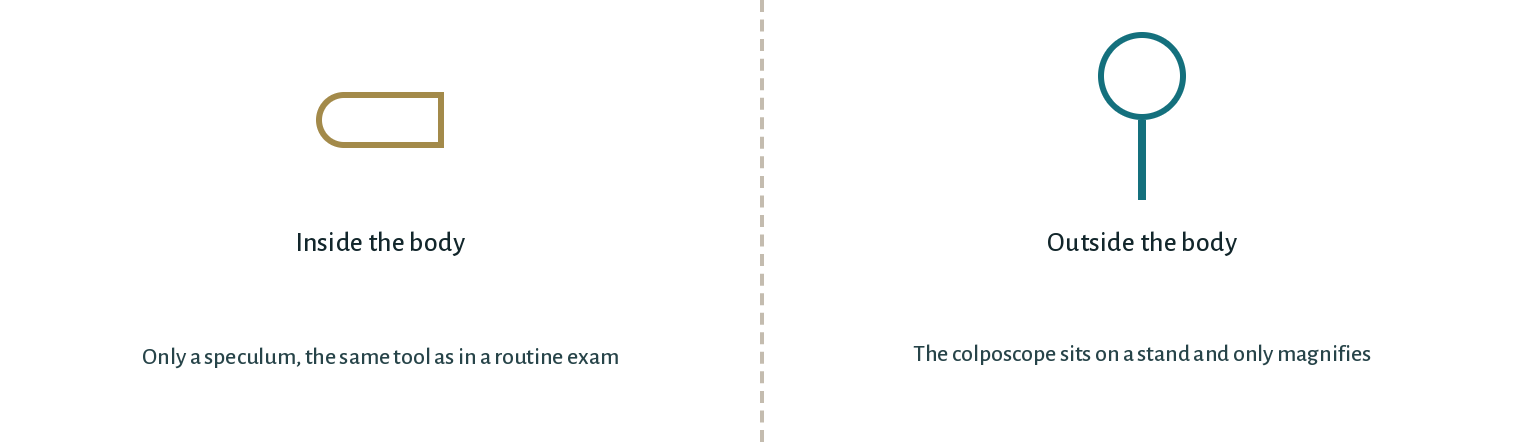
About the image: The dashed line in the middle marks the edge of the body. The colposcope stays on the outside: a magnifying lens on a stand that only enlarges the view and never goes inside the body. What goes into the vagina, just as in a routine exam, is the speculum.

Common myth: “Colposcopy is a treatment”
A colposcopy by itself treats HPV or conditions of the cervix.
A colposcopy is done to take a closer look at the cervix and, if needed, to take a biopsy. If an abnormal area (lesion) needs treatment, your doctor chooses the right method based on the findings. The final diagnosis is made by examining the tissue sample.
Note: In some situations, the exam and the treatment may be done in the same visit. Even so, the colposcopy is the examination and diagnosis step, and treatment is a separate procedure.
When might I need a colposcopy?
Common reasons
- Your Pap test result is abnormal
- Your HPV test found a high-risk type (a positive result)
- You have spotting or bleeding after sex
- The way your cervix looks during an exam calls for a closer look, even if your Pap test was normal (negative)
Positive HPV test but a normal Pap smear: do I still need a colposcopy?
It depends on the HPV type and the results of your previous tests. If HPV 16 or HPV 18 is found, a colposcopy is usually recommended even when the Pap test is normal.
HPV test now negative: is a colposcopy still needed?
An HPV test turning negative (HPV no longer found) does not always mean follow-up is over. Sometimes follow-up continues until it is clear that the changes have gone away. The decision depends on your test history and your doctor’s opinion.
Common myth: “A ‘wound’ or inflammation on the cervix means cancer”
Any “wound” or inflammation on the cervix is a sign of cancer.
What people often call a “wound” on the cervix (usually cervical ectropion, once called “cervical erosion”) and common inflammation of the cervix are usually not cancer. Even so, a colposcopy may be needed for a more accurate diagnosis, so it is best to have the finding checked with an exam and the relevant tests.
What should I do while I wait for my results?
- If a biopsy was taken, the results are usually ready within a few days to a few weeks. The exact time depends on the lab.
- Having a colposcopy does not mean you have been diagnosed with cancer. The exam helps make the next step clear.
- If you have bleeding heavier than a period, fever or chills, severe abdominal pain or discharge with an unpleasant smell, contact your doctor or the clinic promptly.
How do I prepare for a colposcopy?
- If possible, schedule the exam for a time when you are not having your period.
- For 24 to 48 hours before the exam, avoid vaginal sex, tampons, and vaginal creams or suppositories.
- Colposcopy is safe during pregnancy and does not cause miscarriage. If you are pregnant or take a blood thinner, just let your doctor know before your appointment.
- If you are worried about pain, talk to your doctor before the exam about ways to reduce it. If your doctor agrees, taking a simple pain reliever beforehand can help.
Do I need to fast before a colposcopy?
No. You do not need to fast for a routine colposcopy.
Can I bring someone with me?
If having someone with you helps you feel calmer, you can check with the clinic whether they can be there with you.
How is a colposcopy done?
Steps of the exam
- You lie on the exam table, just as you would for a Pap test.
- A speculum is placed in the vagina. The colposcope stays outside your body and gives a magnified view of the cervix.
- A dilute acetic acid solution, and sometimes an iodine solution, is applied to the cervix to show the areas that need a closer look.
- Usually, samples are taken from one or more areas that look abnormal. Taking two to four targeted samples makes the diagnosis more accurate and does not mean your condition is more serious.
How long it takes and how you may feel afterward
- The exam usually takes about 15 to 20 minutes.
- In most cases, you can return to your usual activities the same day.
- If a biopsy is taken, spotting or dark discharge for a few days may be normal.
What does the acid solution do?
The solution is applied to the cervix so that areas needing a closer look show up better, and it may cause brief stinging. An area turning white does not always mean abnormal cells: inflammation or healing tissue can also look this way.
How much does a colposcopy hurt?
Pain or discomfort varies from person to person. It also depends on the stage of the exam and on whether a biopsy is taken.
You may feel some pressure or discomfort.
It may cause mild, brief stinging.
A pinching feeling or brief cramping; sometimes more pain
Ways to reduce pain during a colposcopy
- Talking to your doctor before the exam about your worries and how sensitive you are to pain
- Taking a simple pain reliever before the exam, if your doctor advises it
- Local anesthesia (numbing medicine) if needed, especially for a biopsy
- Slow breathing and relaxing your muscles during the exam
Good to know: These methods do not help everyone to the same degree. Decide with your doctor which option suits you, and do not expect it to be completely painless.
Is a colposcopy done under general anesthesia?
A colposcopy is usually done without general anesthesia, as an outpatient procedure (you go home the same day). If a biopsy is needed, local anesthesia may be used.
What if I have vaginismus or feel very anxious?
Tell your doctor before the exam, so that ways to make it easier, such as a sedative, can be considered based on your situation and what the clinic can offer.
Colposcopy aftercare and warning signs
What is normal, and how to look after yourself
- Spotting or dark brown discharge for a few days
- Mild cramping, like period pain
- After a biopsy, use pads instead of tampons or a menstrual cup
- Avoid vaginal sex for as long as your doctor advises (usually about one week)
When should I contact my doctor or the clinic?
- Bleeding heavier than a period, or bleeding that continues after one week
- Fever or chills
- Severe or worsening pain in the lower abdomen
- Discharge with an unpleasant smell
What should I do if gauze was placed after a biopsy?
Sometimes gauze is placed in the vagina to control bleeding. Before you leave the clinic, ask when and how to remove it, and follow your doctor’s instructions. If you have trouble removing it, contact the clinic.
Understanding your colposcopy results
Normal result
No abnormal area was seen during the exam, or the biopsy showed no abnormal changes. Your follow-up plan is based on your test history.
Abnormal result
An area that needs further checking was seen during the exam, or the biopsy report shows cell changes. Depending on the type and severity of the changes, follow-up or treatment may be needed. This result on its own does not mean cancer.
An abnormal result does not necessarily mean cancer. If your biopsy report mentions CIN, you can read what the grades mean and what happens next on our page on precancerous cervical changes (CIN).
Frequently asked questions about colposcopy
I have never had vaginal sex. Can a colposcopy damage my hymen?
A colposcopy usually requires a speculum. So if you have never had vaginal sex, it is done only when there is a specific clinical reason, with caution and an approach suited to you. Talk to your doctor about this before the exam.
Do I need to fast before a colposcopy?
No. You do not need to fast for a routine colposcopy.
When will my results be ready?
Your doctor usually explains the exam findings the same day. If a biopsy was taken, the results may take a few days to a few weeks.
Does a colposcopy treat recurring infections?
No. A colposcopy is for taking a closer look at the cervix and does not treat infection. An infection needs its cause to be found and the right treatment.
Can the morning-after pill or other medicines affect the results?
Tell your doctor the names of the medicines you take and when you take them, including the morning-after pill (emergency contraception) and vaginal medicines, so it is clear whether they affect the timing or the way the exam is done. (Do not stop any prescribed medicine without checking with your doctor first.)
Can a colposcopy or biopsy affect fertility?
A colposcopy itself and a small diagnostic biopsy of the cervix usually do not reduce your ability to get pregnant. Procedures that remove tissue, such as LEEP (loop electrosurgical excision procedure; in the UK, LLETZ) or a cone biopsy (conization), are different and may affect future pregnancies. If you need such a treatment, talk to your doctor about your pregnancy plans.

Your questions
No question has been published on this page yet.
Ask the first one. The answer is published right here, under your question.






Write your question