


Cervical Dysplasia (CIN): Precancerous Changes of the Cervix
Diagnosis, what the grades mean, and treatment
- CIN (cervical intraepithelial neoplasia) is not cancer. It is a precancerous change in the cells of the cervix, and many low-grade cases go away on their own.
- About 60% of CIN 1 cases get better without treatment.
- Depending on the situation, CIN 2 needs close follow-up or treatment. CIN 3 usually needs to be treated.
- No oral, herbal or topical medicine treats CIN, and removing tissue without good reason in low-grade CIN carries its own risk of complications.
- The reported risk of progressing to cancer is about 3 in 10,000 cases for CIN 1 and about 2 in 100 cases for CIN 3.
Video in Persian
From anywhere in the world
Tehran clinic services
Common myth: “CIN is a stage of cervical cancer”
CIN is a stage of cancer and always causes pain or bleeding.
CIN is the name for precancerous changes in the cells of the cervix. It is not cancer, and not every case turns into cancer. These changes often cause no symptoms and are found during the tests that follow screening.
Important: If you have unusual bleeding, including bleeding after sex, do not put it down to CIN. See a doctor to find the cause.
What is the difference between CIN 1, CIN 2 and CIN 3?
The CIN grade shows how severe the cell changes are and how much of the thickness of the cervix’s surface lining is affected. The higher the grade, the more severe the changes and the more of this lining they involve. None of these grades means cancer.
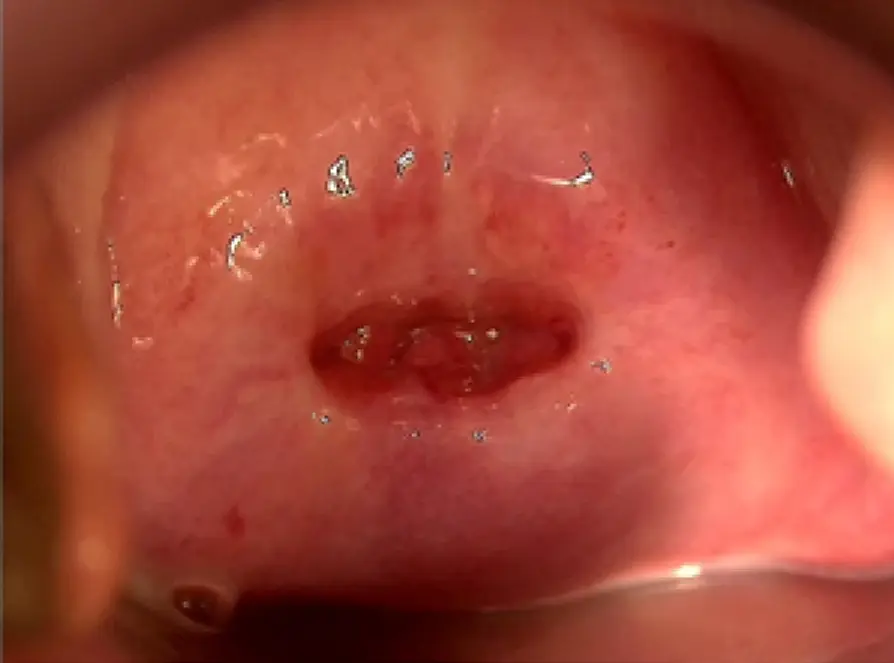
Changes in about the lower third of the lining
CIN1
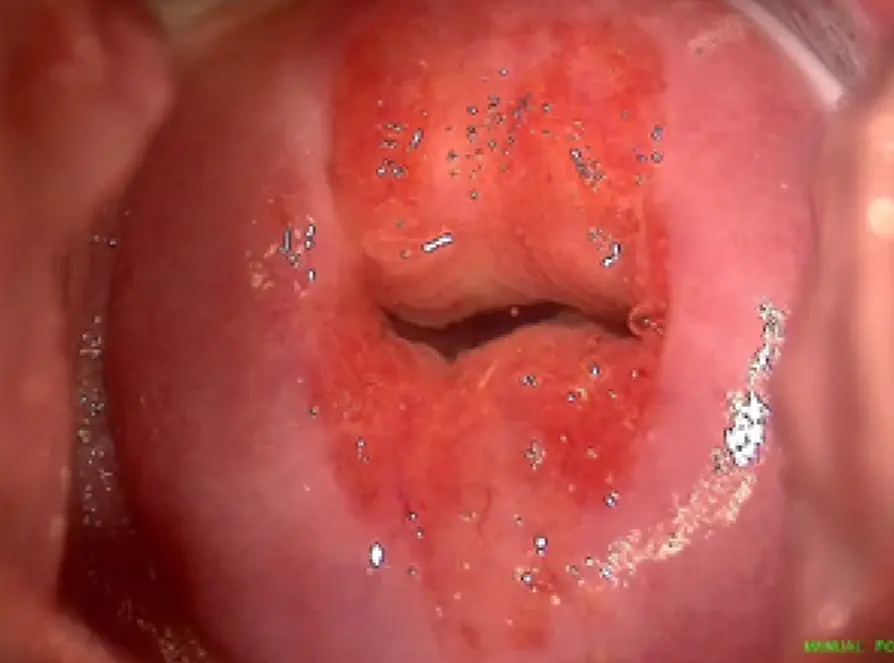
Changes in up to about two-thirds of the lining
CIN2
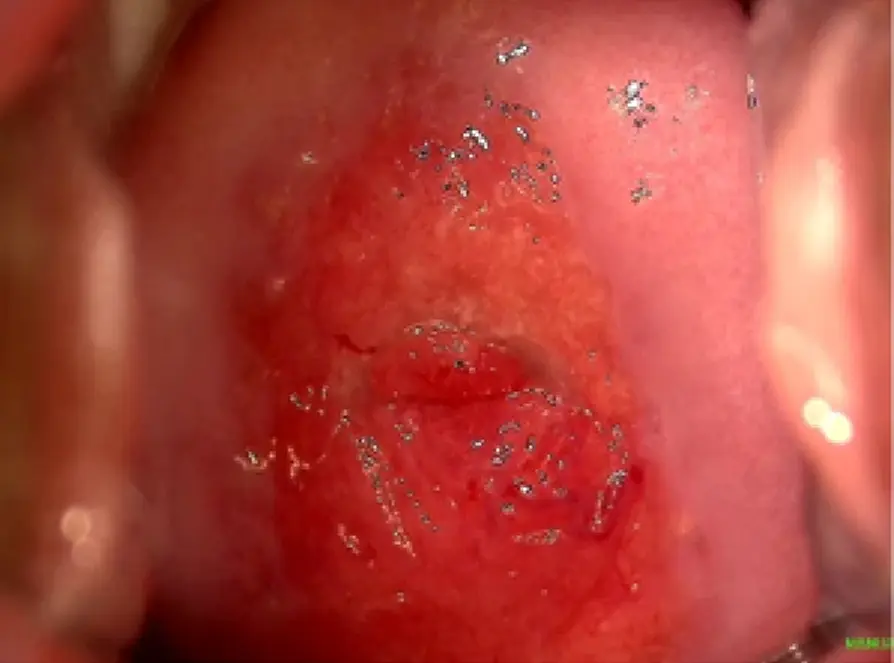
Changes in almost the full thickness of the lining
CIN3
About the images: Think of the lining of the cervix as three layers on top of each other. In CIN 1, only the bottom layer has changed. In CIN 2, the changes reach up to about two-thirds of the thickness. In CIN 3, the full thickness is affected. The photos show how the cervix looks during a colposcopy; only a biopsy can show how deep the changes go and what the CIN grade is.
CIN, HPV and the Pap test: what is the difference?
HPV is a virus, and its high-risk types can cause cell changes in the cervix. The Pap test (Pap smear; in the UK, a smear test) is a screening test that looks for these changes. CIN is the grade of the cell changes, which is found by examining a tissue sample under a microscope.
On a Pap test report, LSIL is often linked to CIN 1, and HSIL to CIN 2 or CIN 3. But these terms are not exact equivalents, and the CIN grade is confirmed by a biopsy.
Does CIN get better on its own, or does it progress?
Cell changes may get better, stay the same or progress. Based on various studies, the approximate outcomes for every 100 women followed up without immediate treatment are:
Each bar = 100 women
CIN1
About 60 women: the changes go away on their own
In most cases, the body’s immune system clears the abnormal cells
About 29 women: the changes stay the same
About 11 women: the changes progress to a higher grade (CIN 2 or higher)*
About 2 of them reach CIN 3 or higher
Usual time frame: a few months to about 2 years
CIN2
About 55 women: the changes go away on their own
The chance of getting better is higher in younger women
About 26 women: the changes stay the same
About 19 women: the changes progress to CIN 3 or higher*
This is the chance of the changes progressing to a more severe grade. It is not the chance of a person getting cancer.
Usual time frame: a few months to about 2 years
CIN3
About 28 women: the changes go away on their own
About 70 women: the changes stay the same
The most common outcome at this grade, which is why treatment is usually required
About 2 women: the changes progress to invasive cancer*
This estimate is highly uncertain
Usual time frame: very slow, over many years
About these figures: These numbers are estimates from various studies, mostly in settings of “follow-up and conservative management” (watching closely rather than treating straight away). They have been rounded to a scale of 100 to make them easier to understand, and they are not a definite prediction for any one person. For CIN 2, some other studies have reported that the changes go away (regress) in about 50% of cases and stay the same (persist) in about 32%. Differences in figures between studies are normal.
CIN changes usually progress slowly. Regular follow-up helps find changes in good time, so they can be managed and treated at the right time.
A very important point about CIN 3
The 28% figure for getting better only describes how these changes behaved naturally in studies. It is in no way a recommendation to wait or put off treatment. Also, the 2% progression figure comes from short-term observation; with long-term follow-up of untreated CIN 3, the cumulative risk of cervical cancer becomes very high (rising to more than 30%). In CIN 3, treatment is usually recommended rather than waiting. Exceptions, such as pregnancy, are decided by your doctor.
Does CIN need treatment, or can it be monitored?
Option 1: regular follow-up
For CIN 1, and for some cases of CIN 2 in young women who plan to become pregnant, Pap tests, HPV tests and, if needed, colposcopy may be used instead of immediate treatment. However, monitoring CIN 2 is only acceptable when the colposcopy was complete, the sample from the cervical canal showed no abnormal cells (a negative result), and the pathology report clearly states CIN 2.
Option 2: treatment
For CIN 2 and CIN 3, treatment is usually considered. Treatment removes or destroys the abnormal tissue, and many of these procedures are done on an outpatient basis (you go home the same day). The choice of method depends on the grade and location of the abnormal area and on your individual situation.
Removing the tissue
LEEP (loop electrosurgical excision procedure; in the UK, LLETZ) or cone biopsy (conization)
The abnormal tissue is removed and sent to the lab for examination.
Destroying the tissue
Cryotherapy (freezing), laser or thermal coagulation (heat treatment)
The abnormal cells are destroyed in place, and no sample is left for examination.

Does CIN 1 need immediate treatment or medicine?
CIN 1 usually does not need immediate treatment and is checked with regular follow-up. Removing tissue unnecessarily can cause complications. Supplements, vaginal suppositories and so-called “immune-boosting” products are not a substitute for follow-up or medical treatment.
Important: Before a method that destroys tissue is chosen, the abnormal area must be fully assessed. These methods are not suitable when the area cannot be seen completely, when it extends into the cervical canal, or when invasive cancer or a glandular lesion (changes in the gland cells) is a possibility.
How the two approaches differ: Treatments fall into two groups. With tissue removal, the abnormal area is cut out and examined under a microscope. With destructive methods, the abnormal tissue is destroyed in place and no sample is left for examination. This is why the results of previous tests and biopsies matter when choosing a treatment.
How is CIN treated, and what can I expect?
Treatment at a glance
Treatment is often quick and done on an outpatient basis. Afterward, you may have spotting, discharge or period-like cramps for a few days. Surgery or a long hospital stay is usually not needed.
Will I need general anesthesia, and does treatment hurt?
Treatment methods differ, and so does the pain people feel. Some procedures are done with local anesthesia, and in some cases, such as certain cone biopsies, light general anesthesia may be needed.
Can I get pregnant after CIN treatment?
Possible complications
- Bleeding or discharge in the days after treatment
- Narrowing of the cervix (cervical stenosis), which is rare
- A small increase in the chance of preterm birth after a large or deep tissue removal
Fertility after treatment
In most cases, pregnancy is possible and fertility is preserved. If a large amount of tissue was removed, extra care may be needed in a later pregnancy, or a stitch in the cervix (cerclage) may be considered. The decision depends on the type and extent of the treatment.
Good to know: With typical tissue removal (less than 12 millimeters deep), the risk of preterm birth is very low: from 3.4% in women who have not had this treatment, it rises at most to about 7% (so more than 90% of pregnancies are not affected by preterm birth). The risk rises further only with deeper removal; this can be managed with pregnancy care, but there is no guarantee that the risk is removed entirely.
How will I be followed up after CIN treatment?
Follow-up schedule
Follow-up is usually done with an HPV test, sometimes together with a Pap test. This check is called a “test of cure” (a check that the treatment has worked). The follow-up plan is an HPV-based test at 6 months; if HPV is not found (a negative result), yearly follow-up for 3 years; and after that, once every 3 years for at least 25 years.
Chance of abnormal cells remaining or coming back
For many people, one round of treatment is enough, but the abnormal area may remain or come back. The HPV test result is one of the most important guides for deciding on further follow-up.
Regular follow-up means your situation is being kept under control. It does not mean the condition will definitely come back.
Good to know: The chance of the condition coming back is not the same for everyone. It depends on the HPV result and on the status of the edges (margins) of the removed tissue, so a single figure for everyone would not be accurate.
Does HPV leave the body completely, or can it stay dormant?
In about 9 in 10 people, the body brings HPV under control within a few months to about two years, and the test can turn negative (HPV no longer found). In a smaller group, the virus may remain at a low level and become active again later.
For a full explanation of how the virus behaves, see our HPV page.
Does stress make CIN worse?
Feeling stressed does not mean your CIN will definitely progress. Your worry is understandable. Do not blame yourself for feeling anxious, and keep up your medical follow-up as planned.
Common myth: “A particular medicine, herb or supplement treats CIN”
A medicine, herbal remedy or traditional medicine can clear up CIN, so medical follow-up or treatment is no longer needed.
There is still not enough evidence for any oral, herbal or topical treatment for CIN. These methods do not replace monitoring or medical treatment. A healthy lifestyle and quitting smoking are good for your health, but on their own they do not count as treatment for CIN.
Is the HPV vaccine still useful after a CIN diagnosis?
The HPV vaccine is meant to protect against new infections. In people who have not been vaccinated, getting the vaccine alongside treatment for CIN 2 may lower the chance of the condition coming back, and this can be discussed with your doctor. The reported reduction in recurrence ranges from about 57% to 65%, and the certainty of the evidence has been rated low to moderate.
Important: The vaccine does not treat an existing infection or abnormal area, and it does not guarantee that the condition will not come back. Its supporting role is still being studied.
Frequently asked questions about CIN
I have CIN 1. Can it get better on its own?
Yes. About 60% of CIN 1 cases get better on their own and usually do not need immediate treatment. Even so, regular follow-up is needed.
Is CIN cancer? What does precancerous mean?
No. CIN is a precancerous change in cells; it is not cancer. It usually progresses slowly, and not every case turns into cancer. Precancerous means these changes are not cancer yet, but some of them may turn into cancer in the future. That is why follow-up or treatment matters.
Will I definitely need laser treatment or surgery?
Not necessarily. CIN 1 is usually just followed up. Close follow-up is also possible in some cases of CIN 2, but CIN 3 usually needs treatment. The right approach depends on your test results and your situation.
Can I get pregnant after treatment?
In most cases, yes. Depending on the type of treatment and how much tissue was removed, you may need extra care in a later pregnancy.
Does HPV leave the body completely, or does it stay?
In about 9 out of 10 HPV infections, the body brings the virus under control on its own within two years, and it can no longer be detected. Even so, a negative test does not always mean the virus has gone completely and for good. In some people, the infection may stay dormant and become active again later.
Why didn't I have any symptoms?
CIN usually causes no symptoms, which is why screening and regular follow-up are important.

Your questions
No question has been published on this page yet.
Ask the first one. The answer is published right here, under your question.






Write your question