


HPV testing
Types of tests, what your result means and the next step
- A positive HPV result (HPV was found) does not mean cancer, and many infections go away within 1 to 2 years.
- Blood tests and routine premarital tests do not detect HPV.
- A Pap test (Pap smear; in the UK, a smear test) looks for cell changes. A normal result does not prove that you do not have HPV.
- In cervical cancer screening, the HPV test checks the sample for high-risk types of the virus.
- Whether you need a repeat test or a colposcopy depends on the HPV type, your Pap test result and your medical history.
Video in Persian
From anywhere in the world
Tehran clinic services
Positive HPV test: what is the next step?
If you have just received a positive result, it is natural to feel worried. But a positive HPV result does not mean cancer, and most infections go away with the help of the immune system.
Having HPV is not a sign that you did something wrong. Below, we explain what each test looks for and how its result affects the next step.
If you are still waiting for your result: how long it takes depends on the type of test and the lab. Please avoid diagnosing yourself based on what you read online.
Screening, diagnosis and staging: what is the difference?
Screening: checking people who have no symptoms to find high-risk HPV or cell changes and decide whether further tests are needed.
Diagnosis: looking into an abnormal result or symptoms to find the cause and the nature of a lesion (an abnormal area).
Staging: done after cancer has been diagnosed, to work out the size of the tumor and how far the disease has spread.
Which test shows HPV?
Ways to detect high-risk HPV
These tests look for the virus’s genetic material. Co-testing (a Pap test and an HPV test done together) adds a check of the cells, and genotyping shows which type of HPV is present.
HPV DNA test
Checks for the genetic material of high-risk HPV types. Depending on the test, the sample is taken from the cervix, or a vaginal sample collected with an approved kit is used.
Combined method (co-testing)
An HPV test and a Pap test are done at the same time.
Extended HPV genotyping
Shows the exact high-risk HPV type, such as 16 or 18.
Tests that do not directly detect HPV
These tests have a different purpose, and a normal or negative result on them does not prove that you do not have HPV.
Pap test on its own
Looks for changes in the cells of the cervix, not for the virus itself.
Routine blood test
A blood test is not a standard way to diagnose HPV infection. To check for infection, a sample is taken from the area in question.
HIV test or premarital tests
Not designed to check for HPV
Common myth: “My Pap test was normal, so I don’t have HPV.”
A Pap test looks for changes in the cells. The virus can be present before the cells have changed at all.
How HPV is checked: from screening to diagnosing a lesion
Pap test
Looks for changes in the cells of the cervix. It does not give a final diagnosis.
HPV test, co-testing and genotyping
Shows whether the virus is present and, with some tests, which type it is.
Colposcopy and biopsy
May be recommended after an abnormal result. Colposcopy of the cervix →
How is a lesion confirmed?
A lesion is confirmed by taking a biopsy and examining the tissue. Ultrasound is not used to diagnose HPV or cervical lesions.
What does your HPV test result mean?
Negative (HPV not found)
No high-risk virus was found in the sample
Continue screening at the recommended interval
Positive, type 16 or 18
One or both of the high-risk types 16 and 18 were found, and further checks are needed. A positive result does not, on its own, mean cancer.
Referral for colposcopy
Positive, other high-risk types
Another high-risk type was found and needs follow-up. On reports that name the exact type, some high-risk types (such as 31, 33, 45, 52 and 58) need closer follow-up.
A cell check or colposcopy, as your doctor advises
Positive, no lesion seen
The virus was found, but no lesion was seen. Most infections go away within one to two years
Regular follow-up, as your doctor advises
Important: A positive HPV result does not, on its own, mean cancer or precancer. It means an HPV infection was found and that it is important to keep up with follow-up.
Why might test results differ?
Two labs gave two different results
The type of test, the quality of the sample and the time between tests can change the result. Your doctor will look at all of your results and decide which follow-up suits you best.
My Pap test was normal, but I have a growth
A Pap test checks the cells of the cervix and is not meant to detect growths on the outside. A growth should be examined separately.
I’m not sure whether a bump is a wart
Not every bump is a wart. Pearly papules, molluscum, skin tags and pimples can be mistaken for warts, so leave the diagnosis to a specialist.
What are the symptoms of HPV, and why are there often none?
Are odor, itching or discharge signs of HPV?
Most high-risk HPV infections cause no symptoms. Odor, itching, discharge or burning may have another cause and do not, on their own, point to HPV.
A sign you may see
Some low-risk HPV types can cause genital warts. Precancerous changes, however, usually cause no symptoms and are found through screening.
Symptoms that do not, on their own, point to HPV
Discharge, odor or itching can be caused by a yeast (fungal) infection, a bacterial infection or something else, and it is best to have them checked.
What if I have no symptoms at all?
Having no warts or symptoms does not rule out HPV. High-risk infection and precancerous changes of the cervix usually cause no symptoms, which is why screening suited to your age and medical history matters.
How can I get an HPV test if I’m a virgin?
If you have never had penetrative sex, whether you need a test, and how the sample is taken, depend on your age, any history of sexual contact, your symptoms and your medical situation. Not having had penetrative sex does not completely rule out HPV passing through genital skin-to-skin contact.
If a test is needed, vaginal self-collection with a suitable kit can be one option. This method does not need a speculum (the tool used to open the vagina so the cervix can be seen), but the swab does go into the vagina. If you have concerns about inserting the swab or about your hymen, talk to your doctor before the sample is taken.
If there is a growth, it should be examined separately. An HPV self-collection test cannot tell whether a bump is a wart or something else.
What is HPV self-collection?
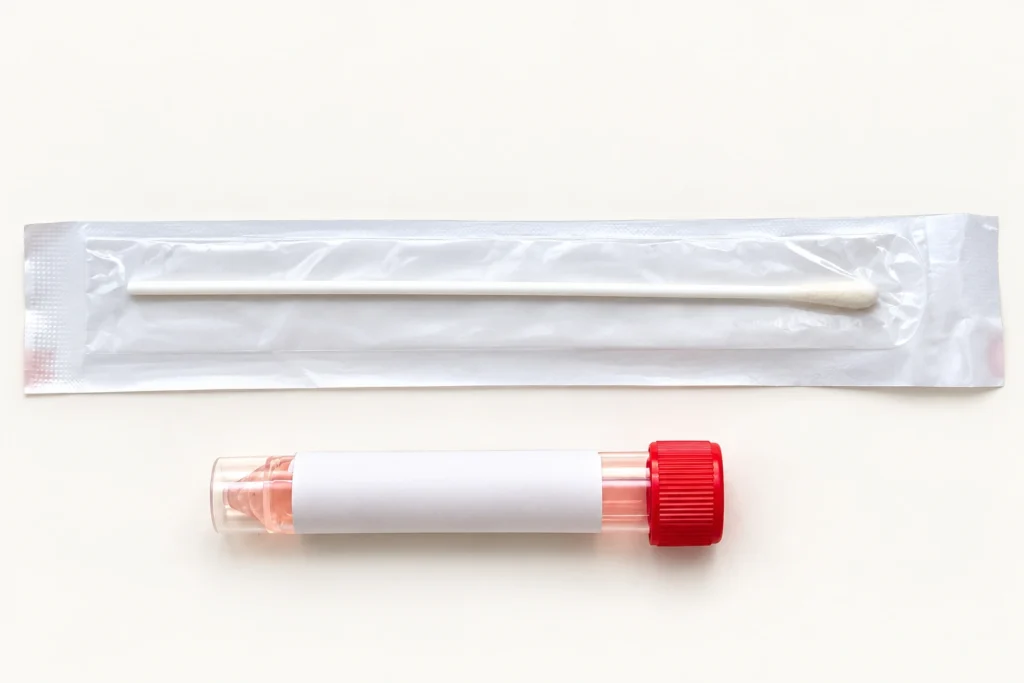
In self-collection (also called self-sampling), you use a special swab or brush to collect a sample from inside your vagina. The sample is sent to a lab to be checked for high-risk HPV types; you cannot tell the result by looking at the swab. The kit should be approved by the lab, and the same center should show you how to take the sample and hand it in.
How do you take the sample?
1. Wash your hands and open the kit. Do not touch the tip of the swab or put it down on any other surface.
2. Following the instructions for your kit, gently insert the swab into your vagina and gently turn it 10 times so that it touches the vaginal wall.
3. Remove the swab and place it in the special tube as the kit instructs, then close the cap tightly.
4. Write down your details and the time you took the sample, and hand the sample in to the lab as the center instructs.
Does self-collection replace a Pap test?
Self-collection is for HPV testing, while a Pap test looks for changes in the cells of the cervix. In some screening programs, the HPV test is the first check, and you can collect that sample yourself. Even so, self-collection does not replace every test, and depending on the result, a Pap test, colposcopy or another check may be needed.
How are men tested for HPV?
There is no routine HPV screening test for men, and diagnosis is usually made by a doctor examining any skin lesions. If a wart or skin lesion is seen, the doctor checks it by examination or by taking a biopsy of the lesion. A blood test does not show HPV either. However, for high-risk groups (such as people with a weakened immune system or a history of anal sex), specialist screening for cell changes in the anus (an anal Pap test) is recommended.
Can a colposcopy or biopsy make a lesion worse?
A colposcopy and biopsy do not make a lesion worse. These tests are done to make a more accurate diagnosis and choose the right follow-up. Looking after your immune system is helpful, but it does not replace medical follow-up.
Do I need laser treatment after a positive HPV test?
A positive HPV test is not, on its own, a reason for laser treatment. In some people, a laser is used to remove warts or to treat certain precancerous lesions; whether it is chosen depends on the type, location and severity of the lesion and on test results. Laser treatment does not guarantee that the virus is completely cleared from the body, and follow-up after treatment is still needed.
To learn about treatment options and when each one is used, see the HPV treatment page.
Preparing for an HPV test, and questions to ask at your appointment
Before the test
It is best not to have a Pap test or HPV test during your period. Your clinic may advise you to avoid sex or douching (washing inside the vagina) for a short time before the sample is taken; follow that clinic’s instructions.
Questions to ask at your appointment
- Which test is right for me, and what does it show?
- What exactly does my result mean, and what is the next step?
- How often should I have follow-up?
- If I’m a virgin, which method is right for me?
- Is self-collection available at this clinic?
Does a positive HPV result mean someone cheated?
- A positive HPV result does not, on its own, mean that anyone has been unfaithful. The virus is very common, and many sexually active people come into contact with it at some point in their lives.
- The virus can stay in the body without symptoms for a long time. It is usually impossible to say for certain when it was passed on or by whom.
- HPV is passed on mainly through skin contact and sexual contact. Blame does not help with care and follow-up.
- If your partner has HPV, make decisions about the next step based on accurate information, medical follow-up and a review of vaccination.
Frequently asked questions about HPV diagnosis
Can a blood test detect HPV?
No. Routine blood tests are not used to diagnose HPV. Testing is done on a sample of cells or by examining a lesion.
My Pap test is normal. Does that mean I don’t have HPV?
Not necessarily. A Pap test looks for changes in the cells, not for the virus itself. The HPV test is a separate test.
What does high-risk HPV mean?
Types 16 and 18 carry a higher risk and usually need further checks. Other high-risk types should also be followed up as your doctor advises.
I have symptoms but no warts. Does that mean I have HPV?
You cannot tell from symptoms alone. Most high-risk types cause no symptoms, and odor, itching or discharge may have another cause.
How can I tell whether a bump is a wart?
Not every bump is a wart. Molluscum, skin tags or pimples can look like warts. A doctor makes the diagnosis by examining it and, if needed, taking a biopsy.
Can I get an HPV test if I’m a virgin?
If there is a medical need, testing is possible. For some people, vaginal self-collection with a suitable kit, without a speculum, is one option. The choice of method depends on your situation and on what the lab offers. If you have concerns about inserting the swab, talk to your doctor before the sample is taken.
How are men tested for HPV?
For men without symptoms, routine HPV screening is not generally recommended. If there is a wart or lesion, the doctor examines it and takes a biopsy if needed. Specialist tests for some high-risk groups are decided based on each person’s situation.

Your questions
No question has been published on this page yet.
Ask the first one. The answer is published right here, under your question.






Write your question