


Diagnosing Genital Warts
How genital bumps and lesions are diagnosed
- Not every bump in the genital area is a wart. Some bumps are normal or benign (harmless).
- Genital warts are usually diagnosed by examination.
- Blood tests, the Pap test (Pap smear; in the UK, a smear test) and the HPV test are not used to diagnose genital warts.
- A home vinegar test is not reliable and can damage the skin.
- Before a bump is frozen, lasered or removed with heat, the diagnosis should be confirmed by examination or a biopsy.
- If a bump looks unusual, has become an open sore or is bleeding, a biopsy may be needed.
Video in Persian
From anywhere in the world
Tehran clinic services
What should I avoid until I am examined?
Seeing a bump or a change in the genital area can be worrying, but not every bump is a wart. A correct diagnosis comes from an examination, and there is no need to draw your own conclusions before then.
- Do not squeeze or pick at the bump, and do not try to drain it.
- Do not treat it yourself with vinegar, acidic products or medicines taken without a prescription, such as acyclovir.
- Do not rely on photos from the internet to diagnose yourself.
- If worry or intrusive thoughts continue, talking with a doctor or a counselor can help.
Genital warts compared with other bumps
Not every bump in the genital area is a wart
Some bumps are a normal part of the body or a harmless lesion and need no treatment. The examples below are for general information only; the final diagnosis rests with a doctor.
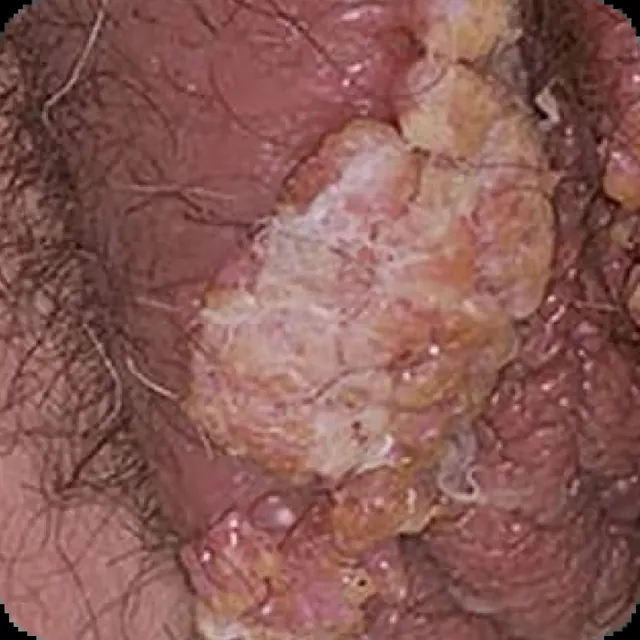
Genital warts (condylomata acuminata)
A soft bump the same color as the skin or slightly darker. Sometimes single, sometimes clustered or cauliflower-like. Often painless, sometimes mildly itchy.
Comparison details
Usually linked to HPV 6 or HPV 11, and diagnosed by a specialist’s examination.
Yes (through genital skin contact and sexual contact)
Usually treated (cryotherapy, laser or a prescription topical medicine); sometimes clears up on its own
Suggested step: avoid picking, shaving or treating it yourself, and see a doctor to confirm the diagnosis and get standard treatment.
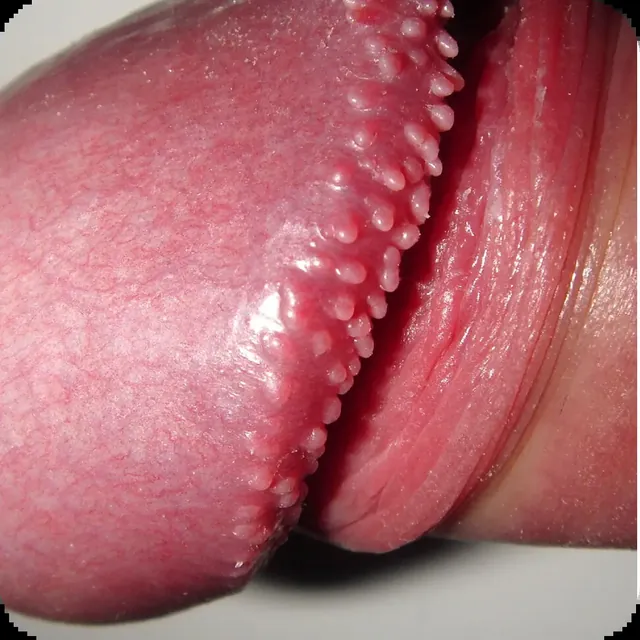
Pearly penile papules in men
A completely regular, symmetrical row of tiny, same-sized bumps around the rim of the head of the penis.
Comparison details
A normal variation in body tissue. It is not a disease, an infection or a contagious lesion, and it needs no treatment at all.
No (not contagious at all)
No (no treatment needed)
Suggested step: no treatment is needed. Reassurance and leaving it alone are all that is required.
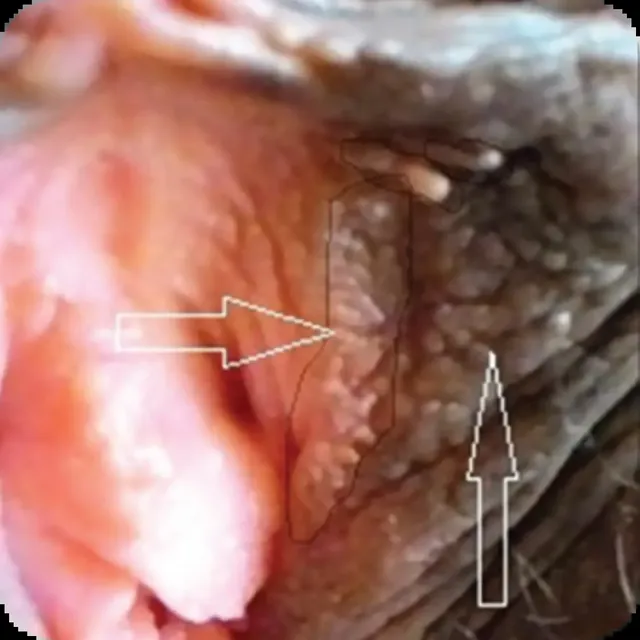
Vestibular papillomatosis in women
Regular, symmetrical, even rows of tiny, soft bumps around the vaginal opening.
Comparison details
A normal body variation that has nothing to do with sexual activity or the state of the hymen.
No (not contagious at all)
No (no treatment needed)
Suggested step: it is completely harmless. It needs no destructive treatment or surgery and should not be mistaken for warts.
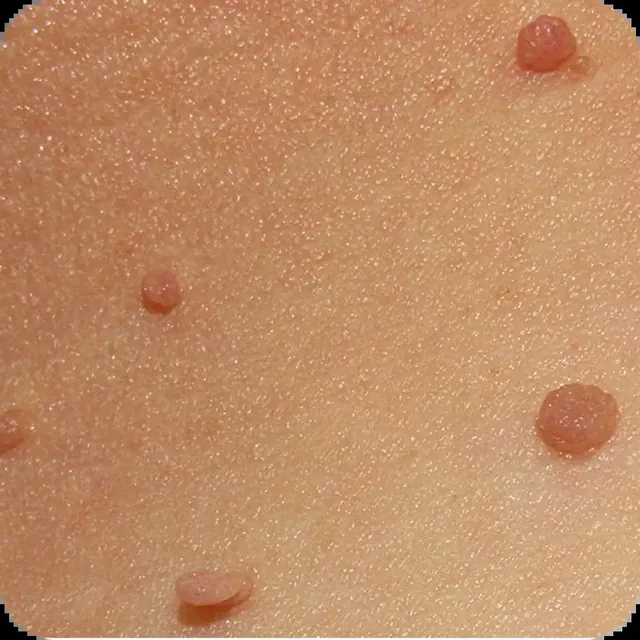
Skin tags
A soft, hanging growth on a narrow stalk, the same color as the skin, usually single, found in skin folds and areas that rub.
Comparison details
Completely benign; it is not an infection and is not contagious.
No (not contagious at all)
Optional (if it rubs or for cosmetic reasons)
Suggested step: if it is bothersome or rubs against clothing, it can be removed with simple outpatient procedures.
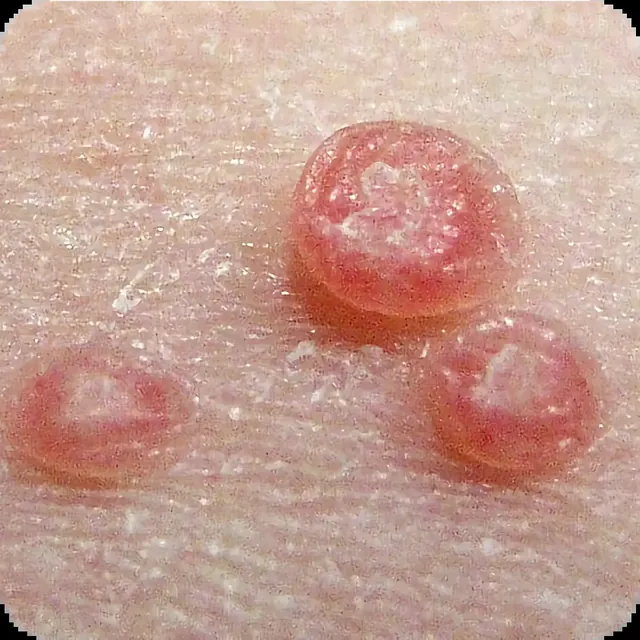
Molluscum contagiosum
A smooth, dome-shaped, pearly bump with a small, navel-like dip in the center.
Comparison details
A separate viral infection that is fundamentally different from genital warts.
Yes (direct skin-to-skin contact)
Often clears up on its own; if needed, cryotherapy, scraping with a skin curette or a prescription topical medicine
Suggested step: avoid squeezing or scratching the bumps, so they do not spread to other parts of your body.
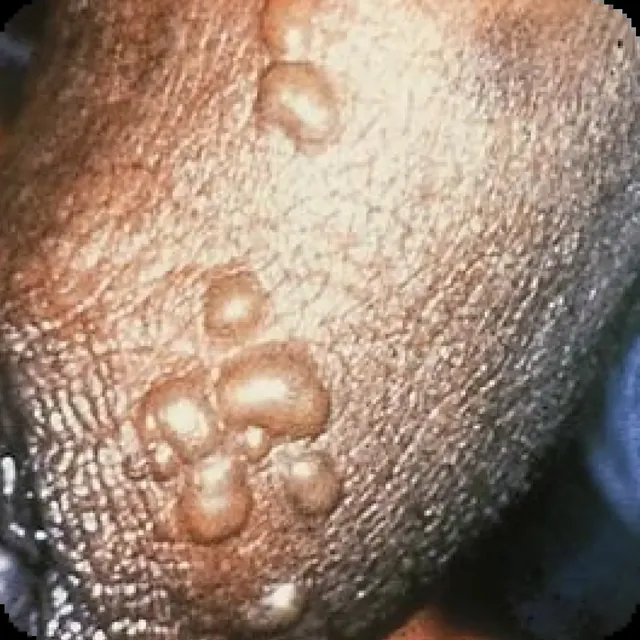
Genital herpes
Tiny blisters, often in clusters, that may turn into shallow sores with pain or burning. Sometimes the symptoms are mild and the sores do not look distinctive.
Comparison details
Caused by the herpes virus. It needs a doctor’s assessment and antiviral medicine started promptly.
Yes (especially while there are blisters or open sores)
Yes (oral antiviral medicines such as acyclovir, prescribed by a doctor)
Suggested step: see a doctor promptly when symptoms first start, so the duration and severity of the sores can be kept in check.
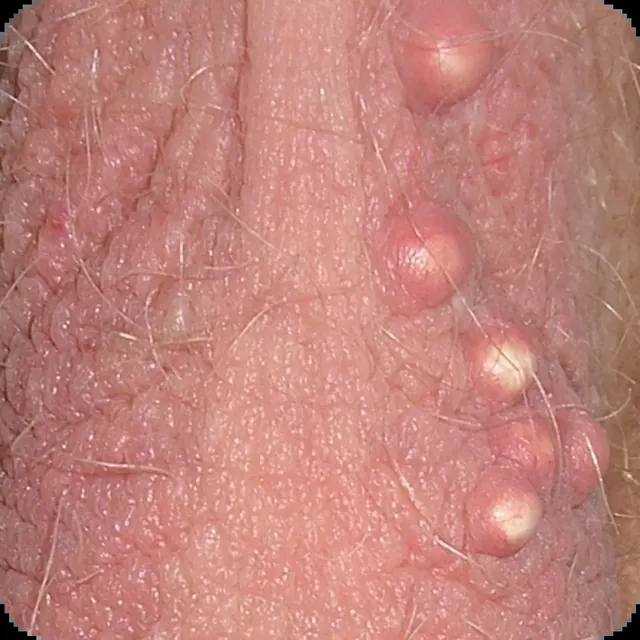
Pimples, sebaceous cysts or folliculitis
Folliculitis is inflammation around a hair root. It usually looks like a red, tender bump that sometimes contains pus. A skin cyst is a bump under the skin that may be painless and not red until it becomes inflamed.
Comparison details
Usually not contagious. It is caused by blocked pores or an inflamed hair root and has nothing to do with warts.
No (usually not contagious)
If it lasts, becomes infected or is very painful
Suggested step: do not squeeze it. Keep the area clean, and see a doctor if it does not get better.
Genital wart or pimple: what is the difference?
Genital wart
Fleshy and soft; sometimes clustered or cauliflower-like
Usually painless; sometimes mildly itchy
May last for weeks or months without treatment
HPV; can spread through skin contact and sexual contact
Pimple
Red and inflamed; sometimes with a white, pus-filled head
Often painful or tender to the touch
Usually gets better within a few days to a week or two
Blocked pores, oil or inflammation; usually not contagious
How are genital warts diagnosed?
1. Visual examination by a doctor
This is the main way warts are diagnosed. In most cases, a doctor can recognize a wart by looking at it, and no other test is needed.
2. Acetic acid (limited use)
The acetic acid test is not recommended as a routine way to diagnose genital warts, because it carries a high chance of false-positive results and does not change the treatment plan. It does not replace a doctor’s examination.
3. Biopsy in specific cases
If a bump is firm, has become an open sore, bleeds or is an unusual color, or if it does not respond to treatment or gets worse during treatment, a biopsy (taking a small tissue sample) may be needed. After examining you, your doctor will decide whether a biopsy is needed for a more precise diagnosis.
Which test is right for diagnosing genital warts?
Blood tests, Pap tests and HPV tests do not diagnose warts
Genital warts are usually diagnosed by a doctor’s visual examination. Each test has a different purpose, and its result should not be used on its own to confirm or rule out warts.
These help diagnose warts
A doctor’s examination is the main method; the other two are used only in specific situations.
Doctor's visual examination
The doctor looks at the bump itself. In most cases this is enough.
Limitation: if the bump looks unusual, further tests may be needed.
Acetic acid
It sometimes makes small or hard-to-see warts easier to see. It may turn some areas white and make them stand out, but this change on its own is not a sign of warts.
Limitation: it is not specific, it does not confirm warts and it does not replace a doctor’s examination.
Biopsy
It shows what an unusual bump is and helps rule out other causes.
Limitation: it is not a routine test for everyone and is done only in specific situations.
These do not diagnose warts
Each has a different purpose, and its result does not confirm or rule out warts.
Pap test
Checks for cell changes on the cervix.
Does not show whether genital warts are present.
HPV test
Checks for certain HPV types that are linked to changes in the cervix.
Not recommended for diagnosing the warts themselves. Its result does not confirm or rule out warts.
Blood test
May be ordered to check for other infections, such as syphilis or HIV.
Does not diagnose genital warts.
My test was negative, but I still have a bump
- Every test result has to be read in light of the type of test and where the sample was taken from.
- The Pap test and the HPV test have different purposes. A negative result on either one (no abnormal cells, or no HPV found) does not rule out a wart you can see.
- If the bump is still there, a doctor’s examination will show whether it is a wart or something else.
Confirm the diagnosis before heat removal or freezing
Several different conditions can look like warts. Before freezing, heat removal or laser treatment, talk with your doctor about what the diagnosis is based on and whether more tests are needed. If the bump is unclear or unusual, a biopsy may help.
Freezing, heat removal or laser treatment of a bump without a correct diagnosis can damage the skin and can even make it harder to find the real cause.
Can vinegar or a home test kit diagnose warts?
Vinegar test at home
It is not reliable. Some warts may not react, and healthy or irritated skin may turn white. Even when doctors use acetic acid, it does not replace an examination.
Home HPV test kit
It may check a sample for HPV, but it does not show the wart itself, where it is or how severe it is, and it does not replace an examination.
Can you get genital warts without any sexual contact?
- Without sex or intimate skin contact, genital warts are less likely. Many bumps can be a normal part of the body or an oil gland.
- External bumps are usually checked by looking at them, without an internal exam. If an internal exam is needed because of other symptoms, your doctor should explain why.
- Tiny, symmetrical bumps around the vaginal opening may be vestibular papillomatosis, a normal variation that has nothing to do with sexual activity or the hymen. It is diagnosed by a doctor’s examination.
- You can ask your doctor your questions without embarrassment or fear of being judged.
How are genital warts diagnosed in men?
- In men, too, genital warts are usually diagnosed by a doctor’s visual examination.
- There is currently no routine, approved test to screen men for HPV.
- A vinegar test can give false results and does not replace an examination.
Genital warts in pregnancy, and signs that need checking
Pregnancy
In pregnancy, warts may grow or become more fragile. They are still diagnosed by examination.
The timing of treatment depends on your individual situation. A cesarean section (C-section) is not recommended just to prevent passing on HPV. It is usually considered when the warts block the birth canal or the risk of bleeding is significant. Passing the virus to the baby in a way that leads to warts in the baby’s airway is very rare.
When should I see a doctor promptly?
If you notice a new or unexplained bump, have it examined so it can be diagnosed.
If the bump bleeds for no clear reason, grows quickly, changes color or shape, causes lasting pain or burning, or becomes an open sore, do not put off seeing a doctor.
If you see no bumps or changes
Not seeing any warts does not, on its own, rule out HPV infection. Many people with HPV have no visible bumps.
If you are still worried, your doctor can advise you, based on your situation, on whether an examination or further tests are needed.
Frequently asked questions about diagnosing genital warts
How can I tell whether this bump is a wart or something else?
How a bump looks helps with the diagnosis, but a reliable diagnosis comes from a doctor’s examination. Skin tags, pearly papules, vestibular papillomatosis, molluscum, herpes and cysts can all look like warts.
Can a blood test diagnose genital warts?
No. A blood test is not used to diagnose the wart itself. Diagnosis is usually made by a doctor’s visual examination.
Does a Pap smear show genital warts?
No. A Pap test checks for cell changes on the cervix, and an HPV test checks for certain types of the virus. Neither one, on its own, confirms or rules out warts.
My Pap smear or HPV test was negative. Why do I still have a bump?
These tests are not designed to diagnose warts. If a visible bump is still there, an examination will show whether it is a wart or has another cause.
If it turns white with vinegar, does that mean it is a wart?
No. Healthy or irritated skin may also turn white, and some warts do not react. A vinegar test at home is not reliable.
What should I ask before a bump is frozen or removed with heat?
Ask what the diagnosis is based on and whether the bump looks like a typical wart. If the diagnosis is unclear, further tests or a second opinion can help before any destructive treatment.
I haven't had sex. Could this bump be a wart?
Without sex or intimate skin contact, warts are less likely, and some normal body variations can look like warts. A visual examination can clarify the cause.
Can genital warts turn into cancer?
Visible warts are usually linked to low-risk types of HPV, which are different from the types that can cause cancer. If an HPV test has found a high-risk type, continue the recommended cervical follow-up. This result does not mean a wart has turned into cancer.
Also, having genital warts is not, on its own, a reason to have Pap tests earlier or more often. Your cervical screening and follow-up schedule is based on your age, your medical history and your test results.
Can a biopsy make a bump bigger or worse?
No. A biopsy takes a small, controlled sample and does not make the bump grow. It is done only when your doctor needs it for a more precise diagnosis.

Your questions
No question has been published on this page yet.
Ask the first one. The answer is published right here, under your question.






Write your question