


Cervical laser treatment
Uses, how it is done, and aftercare
- Laser treatment is not suitable for every problem of the cervix.
- The decision to use a laser is made once the cause of the symptoms is clear and the possibility of precancerous changes or cancer has been checked.
- Cervical laser treatment is usually done as an outpatient procedure (you go home the same day) and takes 15 to 30 minutes.
- What people call a “wound” on the cervix is often cervical ectropion, which is benign (not cancer). If it causes no symptoms, it usually does not need treatment.
- Ectropion is found in 17% to 50% of women of childbearing age.
- Laser treatment does not rule out the problem coming back, and if it is done without a biopsy, it leaves no tissue for examination in the lab (pathology).
Video in Persian
From anywhere in the world
Tehran clinic services
What this page covers
If you have been offered laser treatment for a “wound” on the cervix, the first step is to find the cause and to find out whether you need treatment. On this page:
- You will learn what a “wound” in an exam report means and why it is benign in most cases.
- You will read about the difference between freezing (cryotherapy) and laser treatment, and when each one is chosen.
- You will find out about the treatment steps, how much it hurts, aftercare and the chance of symptoms coming back.
What is a “wound” or “erosion” on the cervix? How is it different from precancer?
A “wound” on the cervix is a description rather than a medical diagnosis. In most cases, the area is cervical ectropion: the lining from inside the cervical canal has come out onto the outer surface. It used to be called “cervical erosion”. This lining is thinner and has more blood vessels, so it looks red and “wound-like”, even though there is no wound or scrape at all.
Ectropion is linked to estrogen levels and is more common in the teenage years, during pregnancy and in women taking combined birth control pills. It has been reported in 17% to 50% of women of childbearing age and in up to about 80% of sexually active teenagers.
Dysplasia, or CIN (cervical intraepithelial neoplasia), means abnormal changes in the cells of the cervix themselves. Ectropion is benign and is not a precancerous change. The two can be present at the same time, but one does not cause the other.

Benign, harmless “wounds”
If ectropion has been confirmed and you have no troublesome symptoms, treatment is usually not needed. Keep up your cervical screening on the recommended schedule.
Signs that need checking
High-risk HPV found on testing (a positive result), an abnormal Pap test (Pap smear; in the UK, a smear test), bleeding after sex or between periods, and a cervix that looks abnormal during an exam.
Common myth: “A ‘wound’ on the cervix is the same as dysplasia or precancer”
Every “wound” on the cervix is a sign of dysplasia and will definitely turn into cancer.
Ectropion is benign and is not precancerous. Redness of the cervix on its own is not a sign of CIN or cancer. Cell changes are checked with screening tests and, if needed, colposcopy; CIN is diagnosed by examining a tissue sample.
About the image: In ectropion, cells from inside the canal can be seen on the outer surface of the cervix. The lining of this area is thinner and the blood vessels beneath it show through more, which is why the area looks red. In CIN, the cells themselves have changed. The appearance of the cervix alone is not enough to tell the two apart.
When is laser treatment of the cervix recommended?
Situation 1: a benign “wound” or ectropion
Laser treatment is not needed, or is not the first choice, if:
- You have no symptoms: treatment is not recommended when there are no symptoms.
- You are pregnant: ectropion usually lessens after the birth, as estrogen levels fall.
- Your symptoms started while taking combined birth control pills: changing your contraception method, on your doctor's advice, may be considered before local treatment.
- The symptoms are caused by an infection: the infection needs to be treated first; laser treatment does not replace treating the infection.
Local treatment is usually considered when:
- There are genuine, bothersome symptoms (heavy discharge or bleeding after sex that is persistent and troublesome)
- The necessary tests have been done, and other causes, such as infection or abnormal cell changes, have been ruled out.
- Symptoms have not improved with time or with simpler measures.
An important point about the evidence
Local treatment can reduce the symptoms caused by ectropion, but complete relief is not guaranteed for everyone. The choice of method depends on how severe the symptoms are, the test results, and the benefits and risks of each method.
Situation 2: confirmed precancerous changes (CIN)
For high-grade precancerous changes, methods that remove tissue are usually preferred over destructive methods such as laser and freezing. Removing the tissue keeps it available for pathology testing and makes it possible to check whether the treatment was complete.
Laser and freezing are acceptable options for precancerous changes only when the whole transformation zone (the area where these cell changes usually start) and the whole abnormal area can be seen during the exam, the abnormal area does not extend into the cervical canal, and there is no suspicion of cancer or of a glandular lesion (changes in the gland cells).
Is laser treatment a permanent solution?
No treatment works 100% of the time, but laser treatment has a success rate above 90%. The laser vaporizes only the targeted abnormal tissue, so the rest of the cervix is left intact. Regular follow-up checks are needed to make sure the result lasts.
Freezing (cryotherapy) vs laser treatment of the cervix
Freezing (cryotherapy) and laser are both destructive treatments for the cervix: they destroy the abnormal tissue in place, and no sample is left for pathology (laboratory examination of tissue). The two have the same goal; the main difference lies in the tool used and how precisely it works.

Freezing (cryotherapy)
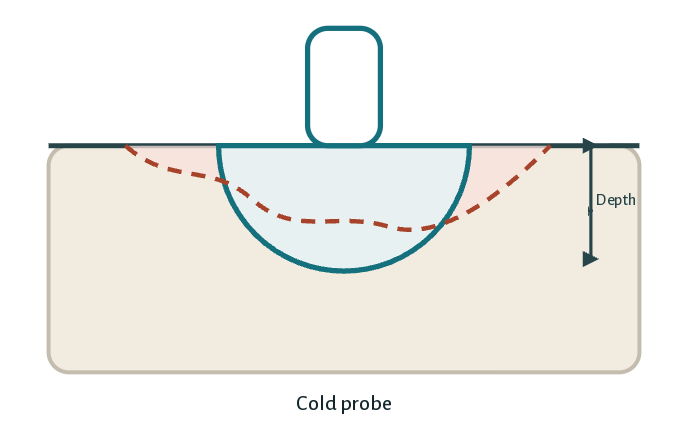
What does it do?
It freezes the target tissue with intense cold and destroys it.
Control over depth and extent
The depth and shape of the treatment are set by the size of the probe tip, so it has limits for large abnormal areas or those with irregular edges.

CO₂ laser (vaporization)
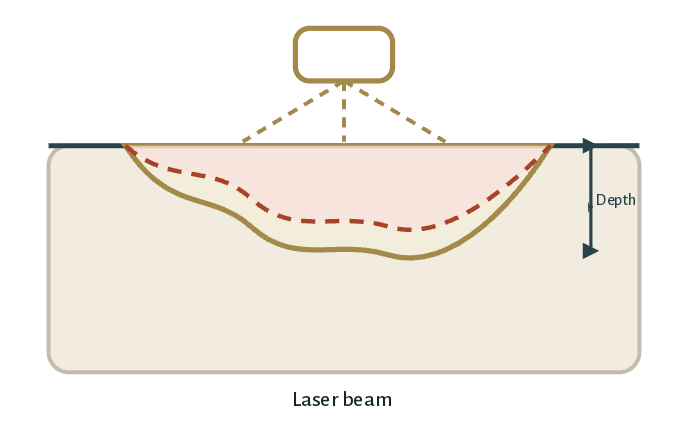
What does it do?
It vaporizes the target tissue with the focused energy of a laser beam.
Control over depth and extent
The depth of the beam and the edges of the treatment can be fully adjusted, so irregular abnormal areas can be covered more precisely.
Usually done without numbing medicine; it may cause cramping or pain similar to period pain.
Usually done with local anesthesia (numbing medicine).
Heavy, watery discharge is very common (in more than 90% of patients) and usually lasts 3 to 4 weeks.
Discharge and spotting are milder and usually last about 2 to 3 weeks.
Odds ratio: 1.84
The chance of failure is slightly higher than with LEEP.
Odds ratio: 1.69
Very close to freezing, and slightly higher than with LEEP.
Which method is better?
When these two destructive methods are compared, their success rates are very close (about 91% for laser versus 90% for freezing), so this small statistical difference does not, on its own, prove that laser is clearly better.
The best choice depends on the size and location of the abnormal area, whether the tissue can be seen completely during colposcopy, and your medical situation.
More important than choosing between freezing and laser is an accurate diagnosis and a biopsy before treatment, because destructive methods leave no sample for pathology.
What tests are needed before laser treatment of the cervix?
Laser vaporization destroys the target tissue and leaves no sample for pathology. So before treatment, the cause of the problem should be identified and the necessary tests, including a biopsy if needed, should already have been done.
1. Your doctor reviews your symptoms, medical history and previous Pap test and HPV test results, and orders more tests if needed.
2. If a test result or the appearance of the cervix needs a closer look, a colposcopy is done. A normal screening test on its own does not replace checking symptoms or a cervix that looks abnormal.
3. If needed, a biopsy is taken from the area that looks abnormal. The tissue results matter when choosing treatment for precancerous changes.
4. Once the results are known, your doctor decides whether treatment is needed and which method is suitable.
When destructive treatment is not used
- When cancer or early invasion is suspected
- When a glandular lesion is a possibility
- When the transformation zone or the abnormal area cannot be seen completely
- When the abnormal area extends into the cervical canal
Can laser treatment delay the diagnosis of a serious problem?
If tissue is destroyed without enough assessment, the diagnosis of a serious abnormality may be delayed, because laser vaporization leaves no sample for examination. That is why it is important to complete the necessary tests before treatment and to keep up follow-up afterward.
How is laser treatment of the cervix done?
Step by step
- You lie on the exam table, as for a routine exam or a Pap test
- Your doctor uses a colposcope to magnify the area and mark out its edges
- Local anesthesia (numbing medicine) is usually used
- The CO₂ laser beam vaporizes the tissue in the target area
- The whole procedure is done on an outpatient basis and usually takes about 15 to 30 minutes
- Most people return to their normal activities within about a week
Is it done under general anesthesia?
General anesthesia is usually not needed; the procedure is done on an outpatient basis with local anesthesia. The final choice depends on the size of the area and your situation.
How much does laser treatment of the cervix hurt?
Pain differs from person to person and depends on how large an area is treated and the type of anesthesia. Numbing medicine helps reduce pain, but you may still feel the pressure of the exam or cramping like period pain.
Having the exam instrument (speculum) placed in the vagina may cause a feeling of pressure or discomfort.
Numbing medicine is used to reduce pain. If you feel pain during treatment, tell your doctor straight away so that your pain control can be reviewed.
You may have mild, period-like cramping for a while. Severe or worsening pain needs to be checked.
Ways to reduce pain during cervical laser treatment
- Talking with your doctor about pain relief options before the procedure starts
- Local anesthesia, if needed
- Taking pain relievers, if your doctor advises it
- Slow breathing and relaxing your muscles
Aftercare following laser treatment of the cervix
What is normal after cervical laser treatment
- Spotting or light bleeding during about the first week
- Watery or slightly bloody discharge that may last about 2 to 4 weeks
- Mild, period-like cramping, especially in the first few days
How should I look after myself?
- Use pads for any bleeding or discharge.
- Avoid vaginal sex, tampons and douching (washing inside the vagina) for about 4 weeks; your doctor will tell you exactly how long.
- Return to light activities as you feel able, and limit strenuous exercise or heavy lifting for as long as advised.
- Continue your medicines and follow-up plan as your doctor has instructed.
When should I contact my doctor?
- Bleeding heavier than a normal period
- Fever or chills
- Severe pain, or pain that is getting worse
- Discharge with an unpleasant smell
- If the bleeding is very heavy, or comes with severe weakness, dizziness or fainting, go to the nearest emergency room or call your local emergency services right away.
Important
Watery discharge on its own is not a sign of infection and may be part of the healing process. If it comes with an unpleasant smell, fever or worsening pain, it needs to be checked.
Can the problem come back after laser treatment, and what does follow-up involve?
- Symptoms going away is not enough on its own: the symptoms or the abnormal area may come back. Follow-up results show where things stand.
- If the underlying cause remains, the problem may come back. In HPV-related changes, local treatment does not treat the HPV infection itself.
- For precancerous changes, follow-up is a long-term plan rather than a single visit: an HPV-based test at 6 months; if it is negative, yearly follow-up for 3 years; and after that, every 3 years for at least 25 years.
Why does follow-up last so long?
People who have been treated for precancerous changes of the cervix have a higher risk than the general population, and this higher risk lasts for 20 years or more. This figure should not frighten you. It means that regular follow-up is itself part of the treatment and is what completes it.
Can the HPV vaccine lower the chance of the problem coming back after laser treatment?
Some studies have shown that HPV vaccination alongside surgical treatment of precancerous cervical changes may lower the risk of CIN 2 or more severe changes coming back. One meta-analysis (a study that combines the results of several studies) reported about a 65% lower risk of new or persistent CIN 2 or more severe changes. However, more evidence is still needed on how well the vaccine works specifically after CO2 laser treatment. Talk to your doctor about whether the HPV vaccine is right for your situation.
How does cervical laser treatment affect fertility and pregnancy?
Laser vaporization (destroys tissue)
1.05
No significant increase
Cryotherapy (destroys tissue)
1.01
No significant increase
LEEP (removes tissue)
1.37
Significant increase
Laser conization (removes tissue)
1.77
Significant increase
Cold knife conization (removes tissue)
2.27
Significant increase
In plain terms: After treatment for precancerous changes (such as LEEP, called LLETZ in the UK, or a cone biopsy), the risk of invasive cervical cancer drops considerably. Even so, regular monitoring and follow-up for at least 25 years are essential to be fully sure.
Ectropion itself does not prevent pregnancy. It is a normal condition in the childbearing years and becomes even more common during pregnancy.
One rare complication after treatment is narrowing of the cervical canal (cervical stenosis), which can affect fertility.
What if I am planning to get pregnant?
This is a valid concern. Two points can help. First, destructive methods and methods that remove tissue do not have the same effect on pregnancy outcomes (see the table above). Second, before any decision is made, tell your doctor clearly that you plan to get pregnant, because this can affect the choice of method and how much tissue is treated.
Can traditional remedies, ozone therapy or plasma therapy treat a “wound” on the cervix?
These are not standard or proven treatments for the cervix and are not recommended.
Ozone therapy has not been approved by medical regulators, and safety warnings have been issued about it. There is not enough evidence for its effectiveness or safety, and complications have been reported.
There is also a safety point about traditional preparations applied inside the vagina: putting any non-sterile substance inside the vagina can lead to infection and inflammation and make symptoms worse.
Next step if your biopsy shows CIN
A CIN diagnosis does not mean cancer. CIN means abnormal changes in the cells of the cervix. Many low-grade cases get better on their own, but follow-up is still important.
Depending on the grade of the changes and your situation, follow-up or treatment will be suggested. For high-grade changes that need treatment, methods that remove tissue are usually preferred, and follow-up after treatment continues over the long term.
To learn about the grades, follow-up and treatment options, read our page on precancerous cervical changes (CIN).
Frequently asked questions about cervical laser treatment
I have never had vaginal sex. Can the laser still be done?
There is no single rule for everyone. The decision depends on the reason for treatment, the examination and your doctor’s judgement. Talk this and any worries through with your doctor before going ahead.
Who should I see, a midwife or a specialist?
A midwife can help with screening and refer you for further checks. To decide about laser treatment, see a gynaecologist experienced in assessing and treating cervical problems, especially if you have an abnormal Pap smear, a positive high-risk HPV test or a suspicious lesion.
How many sessions are needed? What if one session does not work?
The number of sessions is not the same for everyone; it depends on the reason for treatment, the size of the area and how you respond. If the result is not enough, your doctor reassesses you before deciding on the next step.
How much does it cost?
The cost and terms depend on the size of the lesion, the number of sessions and your clinical situation. For details and fees, see the clinic services catalogue.

Your questions
No question has been published on this page yet.
Ask the first one. The answer is published right here, under your question.






Write your question